No Greater Love
The Resurrection of Jimmy Scott’s Stillborn 1963 Masterpiece
The turn of the century re-emergence of jazz balladeer Jimmy Scott was a seismic benediction for American music. An artist capable of imbuing a song with such voluminous yet exquisitely manicured emotional and psychic content, delivered in his own singular, oft accompanist baffling style, distinguished Scott as an incomparably communicative singer.
“He sang like no one else,” Dexter Gordon said. “Ahead of the beat. Behind the beat. In a haunting high-pitched voice that was neither male nor female but both at the same time.”
Scott’s smoky alto (the result of Kallman’s Syndrome, a rare hormonal disorder) carried a tone and presence which infiltrated his audience’s soul, grabbed tight and refused to let go. After a prestige introduction as Lionel Hampton’s boy singer (when Hamp also had Gordon and Quincy Jones on the stand), Scott debuted, uncredited, on disk with 1949’s “Everybody’s Somebody’s Fool” but soon found himself alone, stranded in the post-war jungle of exploitative one-off indie labels. Deals with these (Roost, Regal) thrust him into generally unsympathetic studio situations with crap arrangements.
Landing at Savoy, he issued electrifying classics “When Did You Leave Heaven?” and “(I’m Afraid) the Masquerade is Over,” but floundered commercially, despite building a rabid cult comprised of colleagues (Billie Holiday, Betty Carter, Big Maybelle), hookers, hustlers, pimps, hypes and jazzbos. One can only imagine how easy breezy life as a 4’ 11’ androgynous black person touring 1950s America wasn’t.
“Some thought he was a woman in drag,” said Gordon. “He caught hell for being different—not just as a singer, but as a person on the planet. Yet I never saw him anything but positive, cheerful and ready to roll to the next gig with a smile on his face. Jimmy Scott was one brave motherfucker.”
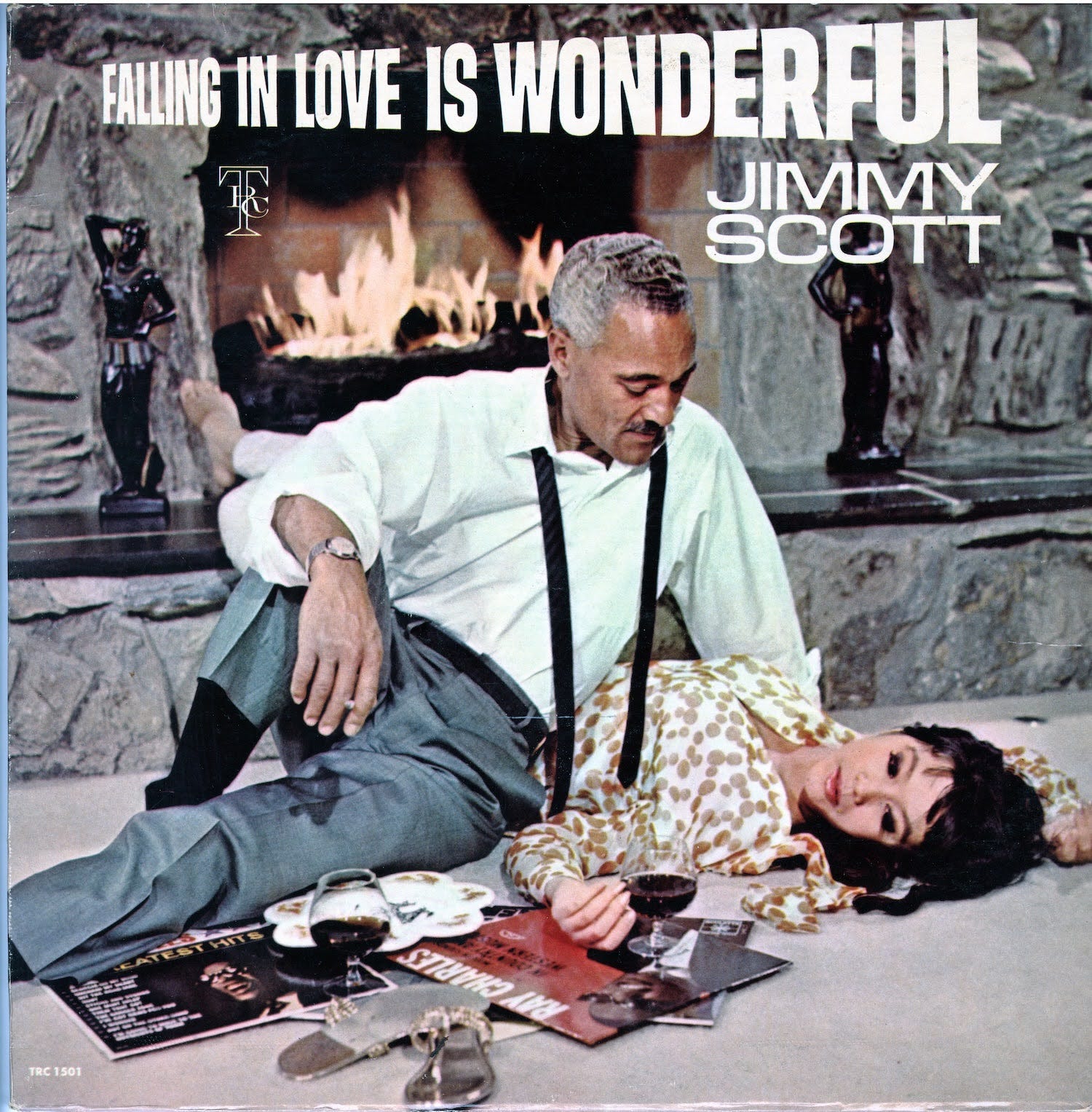
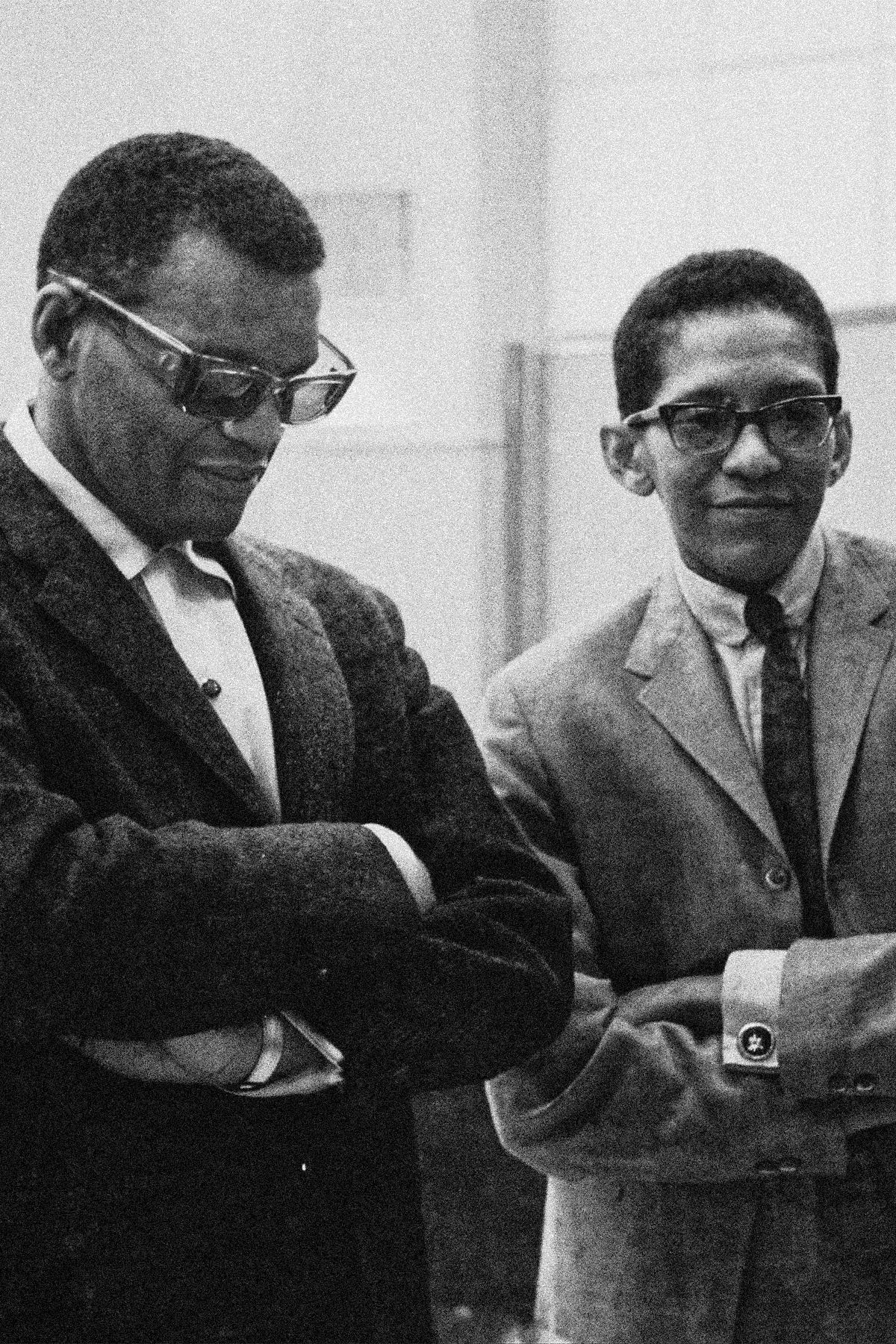
Comes now Brother Ray Charles who, riding high following the boffo success of Modern Sounds in C&W formed his own,label,Tangerine Records, in 1962 and tabbed Scott as the artist to record its first long player. With Charles himself on keys, a repertoire of Scott-selected American songbook classics (Gershwins, Rodgers & Hart, Irving Berlin, Jimmy Van Heusen) and arrangements by most formidable cats Gerald Wilson and Marty Paich, the stars were most emphatically aligned for Scott.
The resulting ten song set, Falling in Love is Wonderful, is one of the greatest jazz vocal albums ever captured on wax. The mood, atmosphere, coloration, charts are ideal presentations for the singer. Never intrusive, always in impeccable taste, the LP is an overwhelming earful.
“I don’t think we did more than two takes on any one tune. There wasn’t any overdubbing either. It was all the way live. The fiddlers were fiddling, Ray was playing, and I was singing, all at the same time,” Scott said. “Ray produced probably the best record I ever made.”
There’s no need to review/dissect/analyze this masterpiece any further—although, psychologically, the song sequence alone constructs a devastatingly holistic study of romance and rejection, passion and loss, equal parts dire melancholy and closely measured exuberance.
Released in 1963, the album was DOA following sabre rattling Savoy schiester Herman Lubinsky’s claim of some imaginary paper which claimed Scott was permanently indentured to his chattel.
Brother Ray ingloriously and immediately punked out.
An initial shipment of the record was already in transit, but it became, overnight, just another bad memory in Scott’s well-stocked cupboard of thwarts and misfortunes.
While FILIW was first re-issued on a pricey, limited 7,500 copy run by short-lived “internet boutique” (gag) subsidiary Rhino Handmade in 2019, it seemed more like they were snobbishly upholding the Savoy stranglehold rather than honoring Scott and enabling fans to hear the damn thing.
Truly, the physical arrival, after 63 years, of this Grail equivalent magnum opus is a significant delight. FILIW demands immersive, dedicated listening, not leapfrogging from track to track between whack quack “this one simple trick” Youtube adverts. It is something to cherish, savor—to have and to hold, honor and obey.
Hear it.
Post script
It was Friday, November 30, 1990. Jimmy Scott’s comeback was in full blossom and he was opening a two-week run at the Hollywood Roosevelt’s plush Cinegrill that very night. I was browsing a recently opened hipster junk store on Burbank’s Magnolia Boulevard and saw a crate of records. Flipping through them, I almost had a massive coronary: Jimmy Scott, Falling in Love Is Wonderful, Tangerine Records.
A stunning moment, especially as I was unprepared for the creepy ebony Hum-Lo tableaux depicted thereupon. This, of course, was pre-internet but having been recently introduced to Jimmy McDonough by his fervent boosters Lux and Ivy, I knew exactly what I had—the scant circulating copies were going for $400.
“How much for this one? Three dollars? Okay.”
Forked over a five spot, got my change, and I couldn’t stop myself. Gesturing at the then de rigeur stack of LA Weeklies next to the entrance, I said “Jimmy Scott, yeah, he’s opening at the CInegrill tonight. I have an interview with him in this issue of the Weekly, check it out… this is a $400 record …”
Jimmy’s performance that night was overwhelming, almost psychedelic in intensity. He transformed “Pennies from Heaven” in an absolute, heartbroken, desperate dirge, a stunning interpretation I never heard him perform again. Electrifying artistry.
I became friends with both Jimmy’s, Scott and acclaimed author McDonough (whose brilliant Village Voice cover story on Scott was the catalyst for the singer’s return to international fame). Not long after, during the dark days of his research on Shakey (when Neil Young was essentially trying to drive McDonough to suicide), I unhesitatingly ceded my copy of FILIW to him. The next time Scott came through Hollywood I did a preview of the engagement stating “he makes Sinatra sound like a worn-out kazoo.” When I saw Jimmy, he rushed me, clamped down a bear hug, whispering “worn out kazoo!”
Weren’t nothin’ finer than hugs from Jimmy Scott, let me tell you. RIP.
pps Pick up a copy McDonough’s incredible new Gary Stewart bio I am from the Honky Tonks.
The Gypsy walk on Magnolia Blvd, the erudition to get past the cover, and $3 dollars lit the fuse to this beautiful tome.. only in your hands, Jonny.